Housing shortages – post WW2

Where did we post-war baby boomers live during the early years of our lives?  There was a big shortage of housing when the war ended in 1945 – and not just in Britain – due to bomb damage, population growth, lack of investment during the war and restrictions on materials and skilled labour.  The answer was a massive house building programme during the 1950s, and the ‘pre-fab’ as a quick temporary solution.

A unique type of mobile home?

A unique type of mobile home?

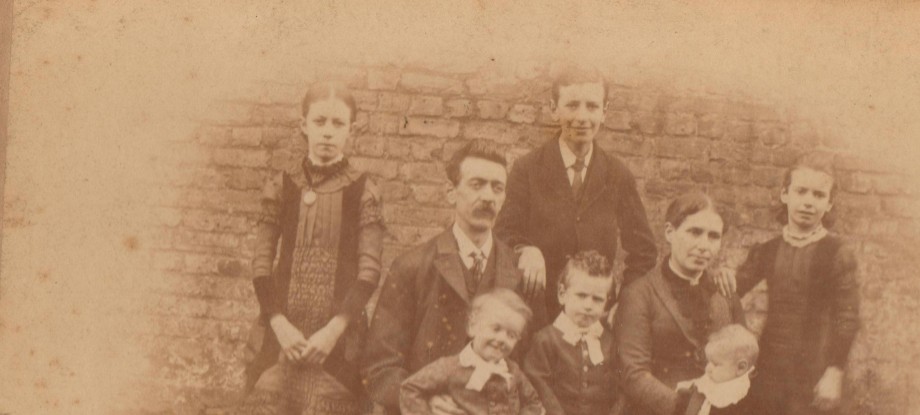
My father (David Lockwood Burnley), married in 1942 and produced his first child (me) in 1947, had a novel idea.  He converted a heavy Crossley military vehicle into a mobile home.  I found a photo of it recently.  It was our home, on and off, for a number of years, in different locations as it could still be driven on the roads.  This happened at night and might have been dubiously legal. It began as our home outside Lincoln, was stored somewhere when my father did a tour of Germany (he was in the RAF) and became our home again on a farm near Colerne in Wiltshire while we awaited married quarters.  I suspect it was eventually abandoned there to agricultural use.

I can actually remember its interior.  Behind the driver’s cab was a twin bedroom, where my younger sister and I slept.  A few steps below it was a bathroom, complete with bath and toilet, though how the plumbing worked escapes me.  Then came a sitting room with a ‘Put-u-Up’ for my parents, with a kitchen at the far end.  Did he have expert help in its construction or was this done by somebody else and he simply bought it?  I wish I knew but am delighted that at least the photo has survived to record its existence.


Margaret

Categories: Men of God, and of Commerce | Tags: , | 2 Comments

Lloyd George Knew My . . .

David Lloyd George

David Lloyd George

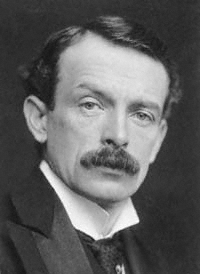
. . .well, not my Father, but my great-great uncle. We usually think of family history as covering the lives of people who were not public figures in their own right, but they sometimes appear at the periphery of the lives of the famous.

Randal Casson (1850 – 1914), younger brother of my great grandfather, was the junior partner in Breese, Jones and Casson, a firm of solicitors in Portmadoc (Porthmadog), Caernarvonshire.  The firm had been founded by David Williams, uncle of Edward Breese, who was the first Liberal MP in Merioneth, winning his seat in 1868. In January 1879, aged 16 years, David Lloyd George was articled to Randal Casson, his fee almost bankrupting his uncle Richard Lloyd.

Randal took the young clerk under his wing and even involved him in local politics, being a Gladstonian Liberal himself.  When David went to London, in November 1880, to take the Law Society’s Intermediate Examination, Randal encouraged him to lengthen his stay:

‘By all means stay a week longer if you like. There is plenty to do and see on one’s first visit to London.’

Randal was a keen member of the Portmadoc Volunteers; his young clerk joined under his command.  They drank beer together and sometimes worked in Randal’s garden on a Sunday.

In April 1884, David passed the Final Examination, achieving only 3rd class Honours.  The fact was that by this time he was more interested in the Portmadoc Debating Society than in the minutiae of the law.  Nevertheless, Randal offered him a place as assistant solicitor, with commission for any new business he brought in. But by this time their relations had soured, the younger man chafing at his inferior position, as his own ambitions grew, and he was determined to set up in competition with his mentor.

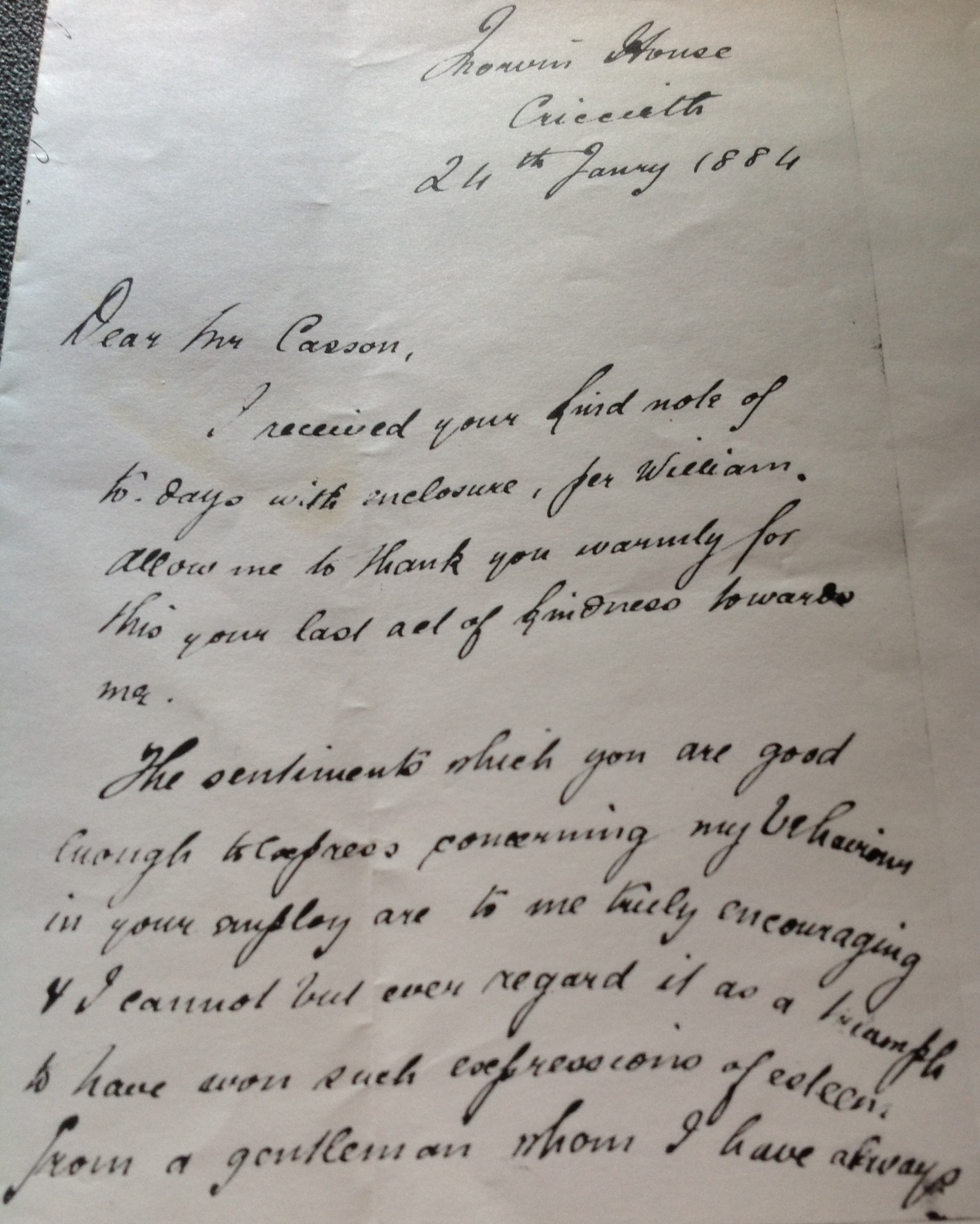
Letter to Randal Casson from David Lloyd George, 24 January 1884

Letter to Randal Casson from David Lloyd George, 24 January 1884

We learn much of all this through My Brother and I, the memoir by David’s younger brother, William George, who was also articled to Randal.  For a while William acted as go-between.  David did set up on his own, and William joined him after qualifying and ran their partnership for fifty years. Randal had reason to resent his young protegé for abandoning the Portmadoc firm and setting  up a rival business.  But ultimately they remained on cordial terms.  Randal softened enough to send him a generous valedictory letter and to keep, throughout his life, the gracious letter he received in return from the future Prime Minister.  In it, David Lloyd George expresses a sense of ‘ triumph to have won such expressions of esteem from a gentleman whom I have always known to be sincere as well as discerning’ and acknowledges his appreciation of ‘the honourable motives which prompted you to take the pains you did to enable me acquire competency in the profession you instructed me in.’


Diana


Diana Devlin ©


Categories: 19th Century | Tags: , , | 5 Comments

Great-grandpa and the social whirl

The next letters I have from Alfred John Liversedge, AJL, to his daughter Ethel are from Curepipe in Mauritius in May and July 1894.  In May he asks her to send him some primroses or violets or even some daises from the fields.  He is sending her and her little sister a box with a few stalks of rice in it; “which I pulled myself from a field.  The rice was growing between rows of sugar cane, and I thought you would like to see just how rice grows.”   By the June letter the flowers have arrived along with a poem and drawings.  He writes that “it is so nice to have some English flowers.  Here they are on my desk before me as I write.  But I’ll tell you what, you should not have tied them up with thread; but you should have got one of Mama’s hairs and tied them up with that.”   He ends by promising to take some sugar-cane for them but warns her that they mustn’t expect it to be like a stick of sugar candy.

Shoot for Admiral Kennedy, Tamarind Falls, Mauritius 1894

Shoot for Admiral Kennedy, Tamarind Falls, Mauritius 1894

I also have a letter to (John) Arthur, his elder son and my great-uncle  written in May.  Arthur would have been 14 and must have written to his father recently mentioning that he was reading Caesar.  AJL picks this up and compares the Roman Empire to the current British Empire.  This time he also describes some of his daily life; “I shall get a half an hour at tennis this evening, if it doesn’t rain.  We must try and fix up a tennis court for mama and the girls soon – it’s a very nice game – it is played a great deal here and the French play it as well as the English.”  I think this must have happened triggering a love of tennis in my great-aunts, I have certainly seen pictures of them and their brothers holding tennis rackets.

AJL spent long enough in Mauritius to take an active part in the social life on the expatriate community.  I have invitation cards in both

Invitation to a deer drive dated 26th July 1894

Invitation to a deer drive dated 26th July 1894

English and French that he received but I expect the most exciting was the invitation to a deer drive at Tamarind Falls on 4 August 1894.   I don’t know whether he later wrote to his children about this but a loose photograph has survived with the pencilled description; “Mr Robinson’s shoot for Admiral Kennedy at Tamarind Falls, Mauritius, 1894”.


Barbara

Categories: Journeys | Tags: , , , | Comments Off on Great-grandpa and the social whirl

Who is going to read this?

There may be many reasons why we begin to research our family history but what we all do with our findings is a big unknown.  Some of us may be content simply to learn facts?  Many of us will want to record what we have discovered for others to read.  But who are these others?  Some of the contributors to this blog site have always been clear that they are writing for their own children and grandchildren mainly, although siblings may be interested too.  Others have cherished wider ambitions and the scope of these very much influences how the research will eventually be written up.  Is it of academic significance and requiring proper footnotes and so forth?  Might it be turned into a fictional account, based on real people and events, to liven it up and cover the gaps imaginatively?

A classic mill-owner in Dickens' Hard Times

A classic mill-owner in Dickens’ Hard Times

My own intentions have changed markedly in the three years I have been working on this project.  I had no idea what it was intended for, except my personal curiosity when I began my Writing Family History course in 2011.  We were encouraged to aim high so I took up the challenge and imagined my ancestors’ story might be of wider historical interest.  I then tinkered with the idea of making it a fictional saga – with its hero a kind, honest mill owner as opposed to the usual fictional villains.  I have lately come to a more realistic goal – that of simply producing it in some inexpensive format in the hope that local studies archives and family history societies might accept a free copy.  I would like to make my diligent research available to any others who might be interested in the local area where my ancestors had their wool mill, Gomersal in the West Riding of Yorkshire, or my Burnley ancestors, who lived there in Pollard Hall for nearly 150 years.  In the context of the Yorkshire wool textile manufacturing my ancestors’ transition from yeoman clothiers to factory owners and their survival for six generations was not particularly remarkable.  Their middling achievements are dwarfed by the mighty Titus Salt, the Crossley family of Halifax or the Listers at Manningham Mill, Bradford to name but a few.

So the process of research was the real satisfaction for me – the joy of discovery and the help of very many people on the way.  While I am amazed at how much information there was out there, the outcome will be a modest document.


Margaret

Categories: How we write, Men of God, and of Commerce | Tags: , , | 2 Comments

Great-grandpa in Albion

Tracking the travels of my great-grandfather, Alfred John Liversedge, is proving difficult; in his adventures in sugar he hardly stayed anywhere long enough to leave a mark.  There are some photographs but most have a minimal description, with the plantation name rather than the country and no date.  But there are a few letters that were saved in my great-aunts sewing box.

Plantation Montrose from Plantation Vryheids Lust

Plantation Montrose from Plantation Vryheids Lust

The earliest dated 22ndMay 1890 was written from Plantation “Albion” to his daughter, Ethel, my great-aunt, when she was four.  This would correspond to the time I think he was in British Guiana (now Guyana).  Planation “Albion” in Guyana has grown into the town of Albion and is now home to the largest sugar manufacturer in the Caribbean region.   In his albums AJL has photographs of Berbice now one of the suburbs of Albion and of Plantation “Montrose” taken from Plantation “Vryheids Lust” (Dutch for Secret Hope).

I have found an account of Albion Plantation in the memoirs of Bruce Watson who was born on the plantation in 1928.  The Albion he remembers was “28,000 acres, 25,000 of which was plantedout in sugar canes. Every field in crop was surrounded on four sides by canals, the back end of the estate being a dammed water conservancy. There were approximately 400 miles of canals grid-like between the cane fields.”[1]  My great-grandfather’s letter gives me little idea of his life there; it is lovely letter from a father to his little daughter, thanking her for sending him “all those nice kisses” and asking her

Drawing of a bird from AJL's letter 1890

Drawing of a bird from AJL’s letter 1890

to give mama a kiss from him at her bedtime.  He says “I am writing this letter in my bedroom, out at a place in the country where they make sugar; and just under the window there are a lot of Koker nuts growing.”  He includes a sketch of himself, a “solemn looking man”.

AJL self portrait Albion Plantation British Giana 1890

AJL self portrait Albion Plantation British Giana 1890

He describes coming into his room and finding a small bird there which he catches and releases out of his window, it had a long bill and “white features on its breast and beautiful dark coloured feathers on its back and wings”. He ends by sending her lots of kisses.  Although obviously I would have preferred a letter giving a detailed picture of the house and his life there I expect this has survived because of the gentle words and fondness he shows in it.  I am sure it must have been much prized by my great-aunt as she grew.


Barbara

Categories: Journeys, Men of God, and of Commerce | Tags: , , , , , , | 2 Comments

Different views of Cyprus

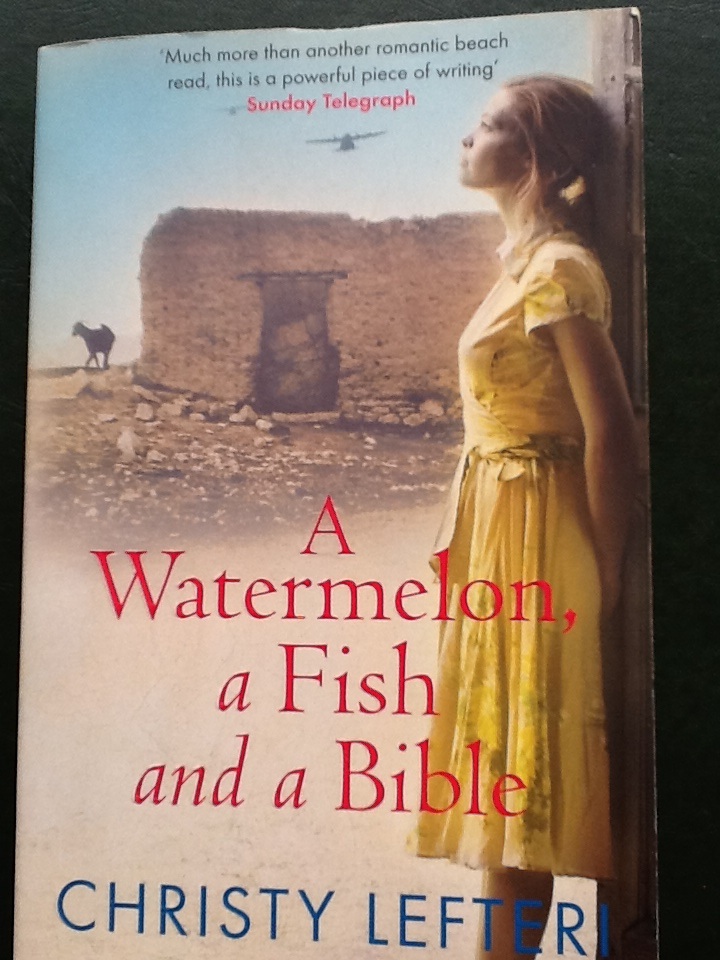
A Watermelon, a Fish and a Bible, by Christy Lefteri

A Watermelon, a Fish and a Bible, by Christy Lefteri

There is a small black and white photograph of my grandfather, Arthur Slaughter, sitting on a sunny verandah. On the back it simply says ‘Self, Cyprus 1916′. That is all I know of his stay there. It must have been taken some months after he was evacuated from Gallipoli in July 1915. He suffered from neurasthenia after the campaign, and perhaps he was sent from Egypt[where he was based] to recuperate.
I had never visited Cyprus until recently when we went for a week’s holiday. Up in the cool of the Troodos Mountains was where the British Colonial Government officials liked to retreat in the hot summer months, and vestiges of their villas and public buildings can still be seen among the pine woods on the southern slopes. These include red-brick villas with green doors and shutters, and corrugated iron roofs, and a splendid one storey building at Plana Pedi, formerly a gym and now a local hospital. All of these would look at home in Haslemere or Hindhead.
While in Cyprus I read two books about the island’s more recent history. The first is “Bitter Lemons of Cyprus’ by Lawrence Durrell
[Faber,1957].In this book, Durrell recounts the time he lived and worked in Cyprus in the mid 50s, before independence and at the beginning of the EOKA terrorist campaign.It is much more than a memoir. The details of the landscape he came to love, and the characters of the local people he knew so well and the many he became friends with, all vividly recreate the atmosphere of the time he spent there, rebuilding an old village house where he settled.His knowledge of the Greek language and culture meant he could see both sides of the political divide that ultimately led to the violent and disastrous end to the ca. 80 years of British rule on the island. It is a stimulating and thought-provoking read for anyone interested in this period in the history of Cyprus, written with humour and the sympathetic eye of an author who writes ‘as an artist and poet’ [according to Kingsley Martin in the New Statesman.]
Much of what happened subsequently was presaged by Durrell. During the 60s violence between the Turkish and Greek Cypriots erupted as political problems between the ethnic groups deepened. In July 1974 the President was overthrown by a coup carried out by the Cypriot National Guard, and Turkey invaded Cyprus on July 20th. During the offensive Turkey took over nearly 40 per cent of the island. 200,000 Greeks fled the northern part which was under occupation. The invasion is the background for the second book I have chosen to discuss – ‘A Watermelon, a Fish and a Bible’ by Christy Lefteri [ Quercus, 2010]. This novel is based on her own family history – her Greek-Cypriot parents moved to London in 1974 during the invasion.Other characters and events in the book are based on accounts by other members of her family and friends. Set in Kyrenia, the area familiar to Durrell, the book recreates the violent events of the invasion and the devastating effect on the local Greek communities,focussing on the women and children, and the long-term impact on their lives. It also highlights the complicated relationships between individual members of the Turkish/Greek and British communities, where friendships [and even romance] were possible , though always under pressure from the different social and ethnic groups.
Both books give an insight into the troubled history of this beautiful island during the last 100 years or so, since that photo of my grandfather was taken.

Categories: How we write, Journeys | Tags: , , , , , | Comments Off on Different views of Cyprus

Wealth gained and lost in two generations

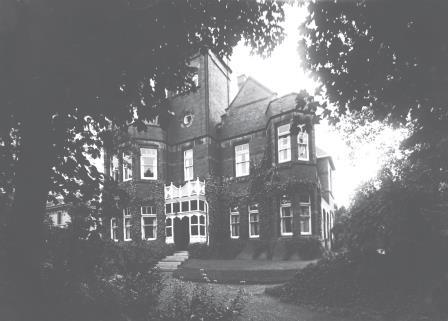
My grandmother, Mabel Harrison, was brought up in a large villa, Parkhill, in West Hartlepool, County Durham.  It had been built for her solicitor father, Matthew Harrison, in 1890.  I do not know how

Parkhill, West Hartlepool

Parkhill, West Hartlepool

many bedrooms the new house had, but there were seven children and a live-in cook/domestic.  It looks imposing with a croquet lawn at the rear, and possibly a tennis court as well.   Matthew Harrison was a prominent local figure who had grown wealthy along with the new town of West Hartlepool which had not not existed until the railway arrived in 1839.  New docks from 1847 onwards meant it became a transportation centre for coal, wool and other goods and by 1900 it was the 4th largest port in the country.  Its prosperity was also due to iron and steel and shipbuilding.  By 1913 upwards of 150,000 tons of ships were being launched each year.  Much new infrastructure was built, for example the Grand Hotel (1899), St. Oswald’s Parish Church (1904) and the Co-op Stores (1913). Skating rinks, parks and the Headland promenade made it a fashionable place.  There was doubtless a considerable demand for legal services.

West Hartlepool’s decline was as dramatic as its rise. Despite many improvements in the inter-war years, including a bathing pool and promenade extension on the Headland, the Great Depression and stagnating world trade saw the Hartlepool’s unemployment figures top 24% and the population remained static at around 90,000.  The solicitors Matthew Harrison & Sons suffered along with the fortunes of the town.  When Matthew died in 1933 his eldest son, who had joined him in the family business, was pessimistic about the value of his estate.  The house itself was sold, divided into four flats and eventually demolished in 1950.  Such were the powerful economic forces that determined our ancestors’ lives.    But this heyday of pre-First World War prosperity left an intangible legacy.  One of Matthew’s seven children, my grandmother Mabel, told stories of past comfort and social status which left a deep impression on me.

Margaret


Categories: Legacies | Tags: , , , | Comments Off on Wealth gained and lost in two generations

What Do I Think I’m Doing?

At the last meeting of the Writing Family History group, we thought it would be good to take stock of our projects, so that’s what I’m doing.

My grandfather on the stone 'Wonderful' Walker sat on to shear his sheep, Seathwaite Churchyard, Lancashire

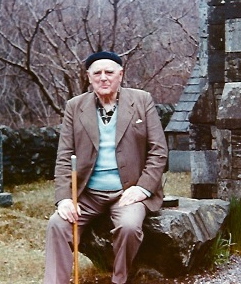
My grandfather on the stone ‘Wonderful’ Walker sat on to shear his sheep, Seathwaite Churchyard, Lancashire

Three years ago I was approaching near-retirement and clearing up my late parents’ house, my stepfather having died in the autumn of 2010, leaving some papers about my mother’s family and some genealogy he had uncovered.  A perfect time to begin what I had always intended to do in retirement – explore my grandfather’s family history, having done a little work on it forty years before, when I was researching his theatrical career.  The Faber Academy:Writing Family History course running from January to July 2011, was just the thing to set me going.  I would concentrate on his great-grandmother, Esther Casson, whose portrait I had known since childhood, and who, I’d always heard, was a remarkable, forward-looking woman.  She was the granddaughter of a Lakeland curate memorialised by William Wordsworth, the Reverend Robert Walker, nicknamed ‘Wonderful’ Walker.

I did not begin research until April 2011, and was chagrined to find there was little or no material relating directly to her. I expanded my project to include my own great-grandmother, about whom there was more information.  I coined the title: Marrying Mr Casson.  How many Mrs Cassons to include remains an interesting question. I am currently focusing on one more, of the intervening generation, daughter-in-law of my first Mrs Casson, mother-in-law of the third.  A difficult woman by some accounts.

It has been slow work, partly because I have given myself such a wide spread, and partly because of the paucity of direct material; I still have a large number of unanswered questions, genealogical and other.  The big question is: Is there a reading pubic for this, or is it of interest only to me and to some of my family?  Much of the information I have gathered has been circumstantial; reading around the context of these women is fascinating, but could tempt me into ‘info-dump’.

I must fictionalise my Mrs Cassons to bring them to life, but I have still not decided what is the shape and thrust of the work or its viewpoint. I am searching for a structure that will give an original slant on researching and inventing their lives.  I love stories of the winding paths people have gone on to uncover their family history.  But there is usually a revelation unveiled at some point in their journey, or a mystery solved. I have discovered no such buried treasure.

I intended to complete a first draft at the end of 2013, but have only reached the 1820s.  I shall continue writing a chronological account mixing fact and fiction, and then see what I really want to do with this study of three British women whose lives stretched beyond both ends of the nineteenth century.  I foresee at least another two years’ work, hopefully with the continuing encouragement and support of the Faber Academy:Writing Family History alumnae, as well as of the family members who take an interest in my project.

Diana

© Diana Devlin

Categories: 19th Century, How we write | Tags: | Comments Off on What Do I Think I’m Doing?

What is a “Mother Tongue”?

The phrase “Mother Tongue” has always intrigued me.  Up until a few years ago I didn’t even think very much of it.  To me it had always meant a person’s first language, period, no more and no less.  There didn’t seem to be anything more interesting to know or even learn about the expression.  However, having recently observed how children pick up languages and by whom, I came around to an altogether different understanding of the phrase, one that called my own assumptions into question.

Today, because we live in an increasingly “globalised” world, our country of birth may not be our country of death or even the place where we ever live again after we are born.  We are comfortable with the notion of moving many times over the course of our lives, whether between cities or amongst countries.  We learn different languages, marry into different cultures and often have two, three or more different careers over the course of our lives.  We no longer necessarily identify ourselves with one country or culture but rather think of ourselves as part of the larger world, “a citizen of the world”.   All of this is already “normal” and increasingly so with every new generation.

So, in the midst of all this variety in life, what do we identify with when we question who we are or, indeed, when somebody else questions who we are?  How do we answer?  What do we say?  Whatever we communicate, we do it through language.  If we happen to speak only one language, then we probably have a fairly coherent sense of self, applying more weight to other characteristics about ourselves when we attempt to answer such questions.  However, if we speak two or more languages then the languages themselves are often a greater or equal weight to the other characteristics which make up the rest of our personality and identity.  And between the languages or amongst them, there always exists a primary one, often termed a person’s “mother tongue”.

A book entitled, "Mother Tongue" by Bill Bryson from 2008.

A book entitled, “Mother Tongue” by Bill Bryson from 2008.

Babies and small children tend to spend the majority of their time with the mother, at least this has historically been the case, therefore any knowledge of words, communication and language had a propensity to be formed by the mother, hence the phrase “mother tongue”.  Despite where the child was born or reared, the mother was the central and significant role model and the primary educator when it came to early awareness and knowledge of the world around the child.  Today, fathers play an increasing role in child-rearing, as do caretakers such as nannies, grandparents or older siblings.  Regardless of whether the mother today continues to play the primary role in a child’s early life however, the phrase “mother tongue” has stuck.  In today’s world, at some point during our lives and especially if we speak more than one language, we will be asked, “What is your ‘mother tongue’?”  Hardly anybody asks, “What is your ‘first language’?”, or even “Which country are you a ‘native speaker’ of?”  Yet we all use these phrases interchangeably.  But are they interchangeable?

The differences between the phrases “mother tongue”, “first language” and “native speaker” are at first insignificant because most of us tend to use the phrases to mean the same thing.  However, after some research, the phrase “mother tongue” comes from “…the assumption that the linguistic skills of a child are honed by the mother and therefore the language spoken by the mother would be the primary language that the child would learn”.  There exists a peppering of other attempts of a definition as well, including “the language one learned first…identifies with…knows best…”.

Separately, the phrase “first language” is thought to mean “…a part of [a child’s] personal, social and cultural identity”.  It is also often thought to mean the language a child has learned from birth or the one they are most comfortable speaking or thinking in and therefore their basis for sociolinguistic identity.

Still different, the phrase “native speaker” is defined by a variety of guidelines according to an article entitled,  “The Native Speaker: An Achievable Model?” including “the individual acquired the language in early childhood…has intuitive knowledge of the language…does not have a foreign accent”.  Here more than in the other descriptions, weight is placed on the intuitiveness one has about a language; inherently knowing the language by having learned its rules unconsciously through experience rather than learning all of its grammatical rules from a textbook.

Hmmm…so how does one define the primary language of a child who is born outside their mother’s own country of origin but speaks only their “mother’s tongue” until they start nursery school and then begins to speak the language of the country in which the family lives with such facility that that language ends up being their “first language” and the child grows up being considered a “native speaker” of that second country?  I still haven’t answered this question about myself.

© Kristina Tzaneff

Categories: How we write, Journeys | Tags: , , , , | 2 Comments

An old legal document

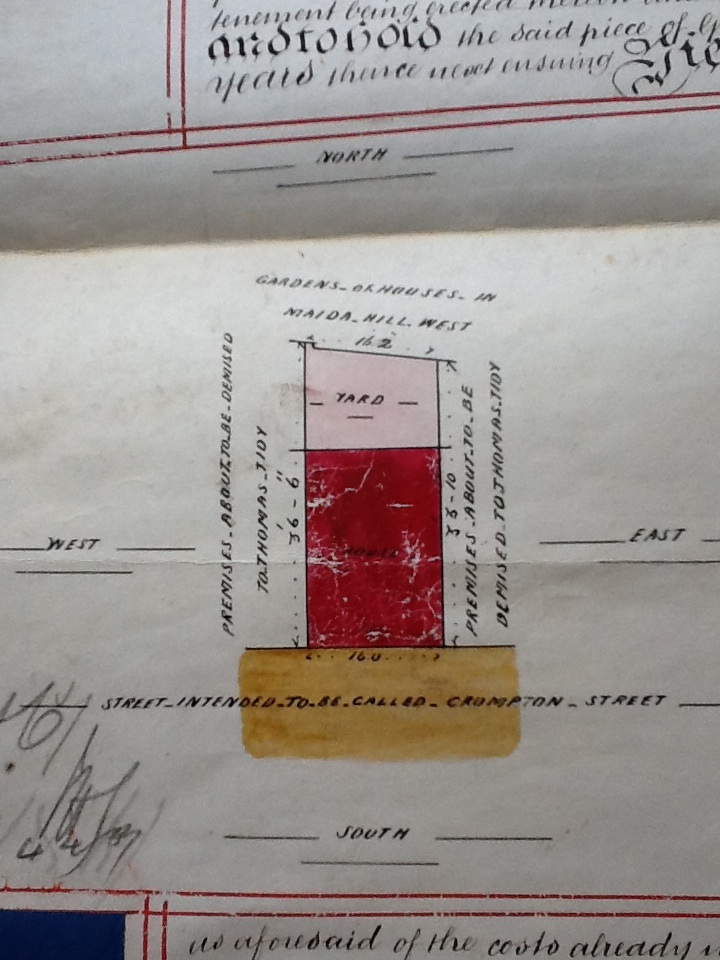
Drawing showing the plot to be developed by Thomas Tidy , 1859

Drawing showing the plot to be developed by Thomas Tidy , 1859

Further finds unearthed while clearing the house include an impressive legal document, handwritten on parchment. Measuring 60cm x 75 cm approx it is an indenture dated 11th March 1859 between Sarah Newnham Hall of Paddington Green [a widow] and Thomas Tidy of Titchbourne St, a builder.It is an 80 year lease which refers to a plot of land on a’certain new street called Crompton Street, westward from the workshop of Thomas Tidy.’
I took the document to the London Metropolitan Archive in Farringdon to see if any light could be shed on it, but apart from confirming it as an original lease agreement there was little they could add.They have many similar in the collection, dating as it does from that great period of Victorian development across London.It led me to explore an interesting by-way of local history of the area, and the connection with the Hall family.
Benjamin Edward Hall [1776 -1849] had inherited the Paddington Green estate from his uncle, James Crompton, in 1820, and had a house built for him called Hall Place.Crompton Street was then called Elm Tree Place.Later, the original large houses were demolished to make way for the tightly packed terraces that were being put up in the 1850s, when the name Crompton St. was adopted.Sarah Newnham Hall [nee Collingwood] had inherited the land as part of her marriage settlement in 1841.No longer the neighbourhood of gentlemen and artists, the area became better known in the 1870s as a result of the music hall song, ‘Polly Perkins.’By 1900, no streets in the area were considered wealthy, unlike Bayswater.The terraces of Crompton and Cuthbert Streets were classed as ‘mixed’ and there were people living in conditions of poverty nearby. The Borough of Westminster replaced the Victorian terraces with the Hall Place Estate in the early 1970s.
Nowhere can I discover how this document came into the possession of my late aunt, nor why she had kept it for so many years. Possibly a member of my father’s family had lived in the house built by Thomas Tidy, and the indenture had come into his or her possession.The eighty year lease expired in 1939, and then came the war. I wish I had been able to ask my aunt to shed light on the mystery. It is interesting to note that the original rent was for seven pounds and seven shillings, to be paid quarterly.

Categories: 19th Century, How we write, Legacies | Tags: , , | 4 Comments