A bizarre accident?

James Burnley (born 1831) died suddenly, age 36, in August 1867.  James’ death and the birth of his seventh child, William, were announced in The Leeds Mercury on the very same day.  There is a story that the cause was a bizarre industrial accident[1].  He was said to be near the top of a stack of bales of wool, helping to add to the pile, when standing up suddenly, his head was pierced by a spike of metal hanging from the roof.  I have been unable to trace any report of this gory tale in local newspapers which then, as today, revelled in such misfortunes.  Nor do I have the medical knowledge to speculate if such an occurrence was even feasible.

However the availability of death certificates from 1837 onwards allows some cross-checking and James’ makes no mention of an accident.   Instead, it states that having suffered an inflammation

James' tombstone

James’ tombstone

of the ear for two years, blood poisoning from an abscess set in and killed him in two days.  Doctors then were powerless against bacterial infections.   His funeral was held within the week and he was interred in a new family vault in the graveyard at the rear of Grove Chapel, Gomersal, (the family vault beneath the Chapel itself having the last place reserved for his father Thomas’ second wife Ann Blanche).  A plain grey stone slab marks the spot.

Could these two different versions of his death be reconciled in some way?  Might an earlier blow to the head have caused the abscess?  If there is any truth in this workplace anecdote, it might actually relate to his uncle William, who suffered a sudden, unexplained death in 1833, at the age of 35.  Unfortunately I doubt I shall ever be any the wiser about this one.


Margaret


[1]  Two Hundred Years of Thomas Burnley & Sons, published in 1954 by the management of Gomersal Mills
Categories: Men of God, and of Commerce | Tags: | 2 Comments

Zeppelin Nights

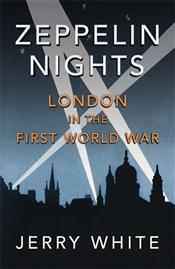
Jerry White is a social historian and Visiting Professor of London History at Birkbeck College, University of London. He is perhaps best known for his trilogy of histories of London in the eighteenth to twentieth centuries. His latest book, Zeppelin Nights: London in the First World War was published by Bodley Head on 1st May this year.

There have already been several recent additions to the literature of WW1 on the “Home Front”; Jeremy Paxman’s Great Britain’s Great War and Kate Adie’s Fighting on the Home Front, having been particularly widely reviewed. It is difficult to envisage that White’s exploration of the life of the capital city in wartime will be bettered, for its scope, detail, insight, narrative pace, and punctilious referencing. White’s particular skill is as an orchestrator of a multitude of sources, and Zeppelin Nights maintains the high standard of his previous social histories of London. The book serves well as a revelatory overview, but the Notes and Bibliography sections are especially valuable as entry points to research into the many aspects of London life the reader might wish to pursue.

9781847921659-largeThe air raids of May 1915 to May 1918, at first by Zeppelins and later by the more deadly Gotha and Giant bombers, form a recurring theme on which the book hinges. Other topics are also familiar: spy scares and anti-German sentiment; munitions work; prostitution; food and fuel shortages; conscription and appeal tribunals; anti-war dissent. However, the fresh facts that White reveals continually surprised me. For example, what proportion of the 750,000 British enlisted men killed or 1.7 million injured, were Londoners, is still unknown.

The factual detail does not get in the way of some memorable scene drawing of the fear, deprivation and resilience of wartime civilian life in the capital.

Particularly vivid, for me, were the descriptions of the London railway termini. Here, thousands of soldiers massed for embarkation, thousands more returned wounded to be transferred by stretcher from railway carriages to queues of waiting ambulances. Throughout the War, families congregated, at first to cheer and later to desperately scan faces with anxiety and tears. Meanwhile, the surrounding streets and lodging houses were peopled by men in uniform, a swollen community of male and female prostitutes, and girls with money in their pockets for the first time and “out for a lark.”

However, the lasting impression I shall take from Zeppelin Nights is how badly served London was by the Government and other authorities, including their response to the air raids. To quote:

“The raids had also exposed some fatal weaknesses in the competence of London’s governors, whether politician or bureaucrat or professional…Few things demonstrate this better than the egregious reluctance to issue public air raid warnings lest Londoners should panic, riot or use them as an excuse to bunk off work…The reluctance to respond, the painful process by which warnings of any sort were dragged out of the authorities, the loss of life that might, shamefully, have been mitigated by public warnings, were some of the bleakest tales of official incompetence exposed by the war on London’s home front.”


Annie

Categories: Books we've read, World War One | 2 Comments

Great-grandpas airship and Zeppelins over London


The Liversedge Rigid Airship  AS54

The Liversedge Rigid Airship AS54

Last year I wrote couple of blogs about a largely unrecognised element of the First World War story; the Zeppelin bombing raids over England and the competition to develop a British airship to rival the German Zeppelin.  My focus was my great-grandfather’s attempts to persuade the War Office that his airship design would both be a significant improvement on those currently being developed and therefore be capable of establishing a British presence in the skies.

Recently Jerry White has published his book “Zeppelin Nights: London in the First World War”.  So far I have only been able to give it a quick perusal but I was interested to see that he has drawn heavily on the same diaries by H Rider Haggard that I found so valuable in illustrating the impact of the Zeppelin raids on London.

I was drawn to Rider Haggard’s diaries because of a letter he wrote my great-grandfather, Alfred John Liversedge (AJL), in November 1915.  My grandfather had sent him a letter and pamphlet and he thanks him for these; “I am glad to know from one who has studied the matter, that my suggestion as to a supply of British airships able to cope with Zeppelins, is not altogether impractical”.

The pamphlet is possibly an earlier copy of that held by the British Library, “The Importance of The Large Airship as demonstrated by recent events on land and sea” published in January 1917 by AJL.   Notes written by AJL describe his frustration in trying to get approval for a prototype of his design to be constructed.  His proposals were first turned down by the then Frist Lord of the Admiralty, a Mr Winston Churchill, not reportedly a supporter of the airship in general.  Luckily he was moved on and his replacement, Mr A. J. Balfour, promptly took them up AJL’s proposal and eventually, after more delays, he was able to start construction at Earles Shipyard in Hull.

 Sadly it was by then too late and the project was stopped on the grounds that he would not be able to have an airship completed in time to be of service in the war.


The Liversedge Airship: Girls rivetting "Backbone" at Earles shipyard Hull

The Liversedge Airship: Girls rivetting “Backbone” at Earles shipyard Hull

I do though have a marvellous archive of his photographs detailing the construction and particularly featuring the young women then being employed in heavy engineering.

Barbara 


Categories: World War One | Tags: , , , , , | 4 Comments

What next, when it’s finished?

We are each taking stock of where we have got to over the past three years of working on our family history and I think now have realistic goals and a lot more confidence about the next stages.  I have finished my writing, bar filling a few holes in research, and am receiving feedback on it.  This has meant a major re-write of one chapter, so the end is forever just out of sight!  Do I need a new project and another branch of the family to research and write up or shall I just cancel my subscription to Ancestry and call it quits?

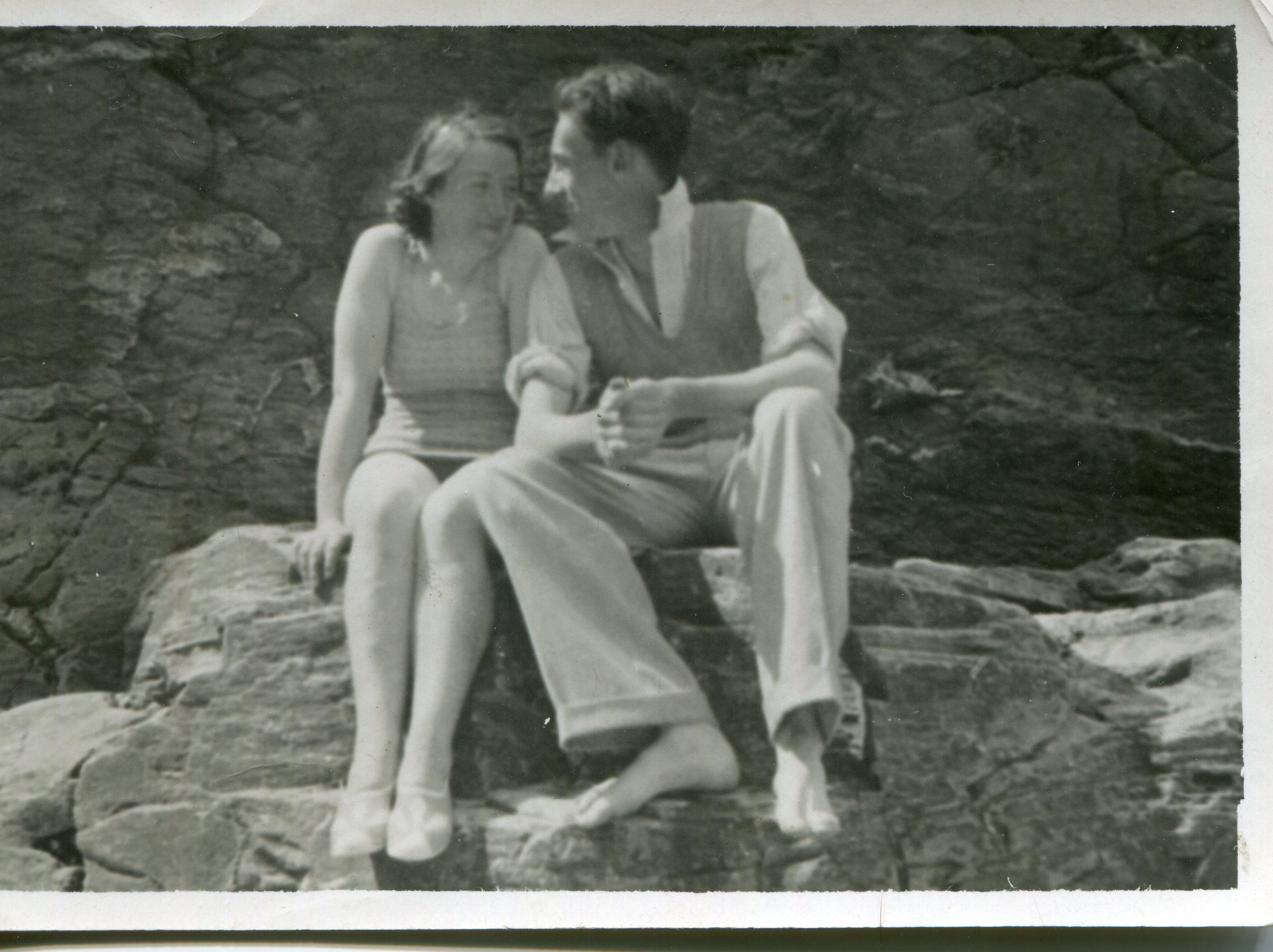
My current project covers the 18th and 19th centuries, with a brief epilogue to bring it up to date.  I am wondering about some work on the more recent past, which would be grandparents in old age, parents and my childhood, but am concerned it could be emotional and painful.  As teenagers and adults my siblings and I took a dim view of our parents’ marriage, which seemed so conflict-ridden.  I have a photo of them, just before they were married in 1942, on the rocks at Tintagel, Cornwall and looking very much in love.

David Burnley and Nancy Dunkley on the beach at Tintagel

David Burnley and Nancy Dunkley on the beach at Tintagel

Another photo shows my father’s mother with them there – on the grounds that it was not respectable for an unmarried couple to go away together without a chaperone.  My father was a keen amateur photographer so I have a super record of our childhood in pictures, but would it add up to anything worthwhile?  Could I record my youthful misadventures with anything but embarrassment and shame?  I am left with the feeling that the journey of such work is more important than the destination.  As we approach old age it seems important to somehow make sense of our lives.  In my end is my beginning, or some such wisdom.


Margaret

Categories: How we write, Legacies | Tags: , , | Comments Off on What next, when it’s finished?

A Detour with the Durants

Some time ago I blogged about the last will and testament of one of my ancestors.  He had stipulated that if the husband of his married daughter Catharine so much as crossed the threshold of the family home, she would lose her inheritance.  I was not particularly interested in following up this daughter, as the real subject of my research is her younger sister Fanny.  However, a week or so back, I had reached the point in my writing when the said Fanny eloped to Gretna Green in the year 1840.  Wanting to put this event into a fuller context, I thought I would find out a little more about Catharine – who, like Fanny, married under age – and about her husband, whose first name I could not quite decipher in the will.  This search has turned out to be a fascinating detour.

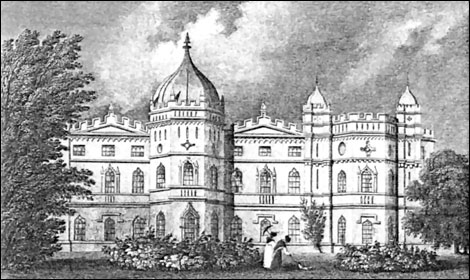
For some time I laboured under the misapprehension that Catharine’s husband had been in the army, for he was listed as Maj. O A Durant in a couple of censuses.  However, this turned out to be a misreading.  After various searches I discovered that he was actually ‘May Osmund Alonzo Durant’, son of George Durant, and his birthplace was Tong Castle in Shropshire.  I was surprised that Catharine’s father, who from other evidence I take to be a bit of a snob, was not impressed at this background, which sounded rather grand.  As is the way with family history research, I could not resist probing a little more.

Tong Castle, Salop

Tong Castle, Salop

The first George Durant (1731-1780), grandfather of my chap,  was the second son of a Worcestershire rector.  As a young man he had a scandalous affair with Lady Lytton, wife of the Chancellor of the Exchequer.  Both families were vastly relieved when he was sent as deputy paymaster to the British forces in Guadaloupe during the Seven Years War.  He made a second trip, returning to England in 1764 with an enormous fortune, gained through a mixture of dubious financial transactions and participation in the slave trade.  He then bought Tong, a village near Shrewsbury, then owned by the Duke of Kingston-upon-Hull, and proceeded to tear down its Tudor castle and build a huge gothic splendour, alas no longer standing, which he filled with treasures from the West Indies.  I look forward to visiting his monument on my way to Wales this summer.

His son George Durant (1776-1844) was notorious for different reasons.  He married a local girl, Mariann Eld, and proceeded to father fourteen children, of whom the youngest was the exotically named ‘May Osmund Alonzo’ born 1816.  But this was not enough, for in 1822 Mariann sued for separation on the grounds of adultery.  He had had three children by one of the nursery maids, and another child by a second nursery maid.  He had also had affairs with a dairy maid and with two different labourers’ wives.

Perhaps it was not so surprising that Catharine’s father disapproved of the connection with the Durant family.  Tune into my next blog for what I have gleaned about May Osmund Alonzo himself.

Diana


Categories: 18th Century, 19th Century | Tags: , , , | 5 Comments

14 Women and a Man

I signed up for an Faber Academy writing course to help me to find time in my regular working week for a writing commitment while I prepared to start a part-time MA at City University in narrative non-fiction writing later that year.   The course was billed as concentrating on research and technical aspects of writing family history.  I have learnt much more.

Lesson One – Protect Writing Time like a Starving Dog.

It is hard to believe that it is over three years since I sat down at a large table with fourteen other eager, but at that stage, timorous people.   A now loquacious group of eleven of us still meet up once a month.  We listen to each other’s challenges and achievements, give feedback on recently written pieces story side tracks and keep up with each other’s non-writing lives.   ‘Life’ has an awful habit of bashing in to the precious writing flow like a lollipop lady who continually stops the rush hour traffic politely but firmly to allow the children to get to school safely and on time.   With a board smile and bold blandishment of her bright florescent sign she firmly steps out on to the pedestrian crossing in the face of the fraught stream of traffic.   She is not concerned about the safety or timeliness of the adult working force.    The first lesson for a writer is to protect their research and creative time with the determination of a starving dog with bone.

Lesson Two – Read Like America’s Greatest Living Author.

I had not realised that the American author Philip Roth had retired from writing.   Now he is happy to give in depth television interviews about the process.  This week BBC aired the first part of a two-part series of interviews with Roth by Alan Yentob.   Apart from understanding how his books could be considered to be a continual personal memoir I felt a sense of relief to hear Roth say that he reads everything all the time.  For enjoyment, to get ideas, to help with a stalling writer’s mind and so on.

http://www.bbc.co.uk/iplayer/episode/b044r6k9/imagine-summer-2014-2-philip-roth-unleashed-part-1

Currently I have Reading like a Writer – A Guide for People Who Love Books and for Those Who Want to Write Them by Francine Prose (yes really!) as my book of the moment.   She has four pages of books she suggest to read immediately ranging for Samuel Johnson in the eighteenth century to Philip Roth currently considered America’s greatest living author.    I always told those who enquired about my education that I had had a polite one.   Now I have to say that I think I had no real education.   In the endless English Literature classes with the perky girlie nickname of Millie Miles, when in reality our teacher was old, grey and very bored with us, I cannot remember being assigned with studying the theme of blindness in Oedipus Rex and King Lear.   Or asked to look at a paragraph of Lord of the Flies, one of our O’level books, to work out the single words and phrases that William Golding used to build the different and changing characters of the boys stranded on the island.   People who have been writing successfully most of their lives have usually had that good educational grounding to build on rather than the instinctive learning people like me cobble together as we go though life.    So with the renewed help of Francine Prose to read as widely like America’s greatest living author Philip Roth suits me just fine.

Lesson Three – Just keep writing regularly whatever .

No more to be said!

Nicola

© Nicola Stevens 2014


Categories: How we write | Tags: , , , | 2 Comments

Three years on

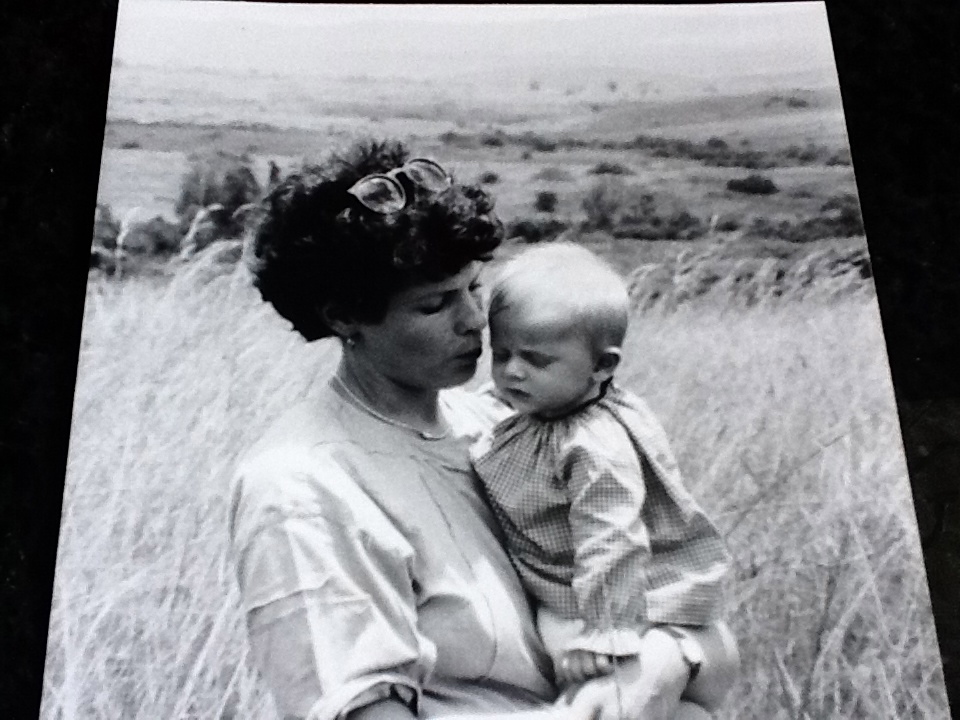
A little over three years ago, without quite knowing what I was letting myself in for, I arrived at the Faber offices in Bloomsbury for the first meeting of their new Writing Family History course. I had signed up the summer before and had not given it much thought until the day arrived for that first session on a chilly January evening. In the summer, anything seems possible – the evenings are light, the air is warm and just as the days are long and full of life, so in my heart and head it seemed just the right thing to do, commit to a weekly writing session in London, 150 miles away from where I live, starting the following January, without giving much thought to the practicalities let alone whether I was in any way capable of doing the writing. I look back at that time with a wry shake of my head – it was not the first time I had signed up for something of which I had little experience. But it turned out to be one of the best things I have done. it showed me that perhaps I can write, something that I was never sure about and while it didn’t exactly lead us by the hand straight to a publishing deal, the course did give us a community of writing friends, friends who still meet regularly and work to keep each of us on our toes and writing something, anything that can be put online on this blog and that may add to our projects. I felt humbled after that first meeting – everyone seemed to have ‘a project’ that this course was meant to further, everyone that is apart from me. I drove back home at midnight down the empty motorway around Birmingham and the cold, star- bright Shropshire countryside and thought what a mistake I had made and how could I go back, when I had no project, no writing under my belt, no way forward. Well, the course showed me I could write andI did find a project, in a roundabout fashion, an idea that perhaps my own life could be mined – it came about through an exercise that we had to do about a house we had lived in. I chose our house in Zaire…I am still writing about that life, a life that is long gone but still vivid, remembered through letters, pictures, people so precious, that it feels to me that it should be recorded, honoured. Three years on and it is slow-going, life gets in the way and I need a prod every once in a while, but I get that from our group and summer is upon us, so for a few months anything seems possible, doesn’t it?

Clare and Sam in the bush in Zaire 1984

Clare and Sam in the bush in Zaire 1984

Categories: How we write, Journeys, Out of Africa | Tags: | 1 Comment

Where do we think we are?

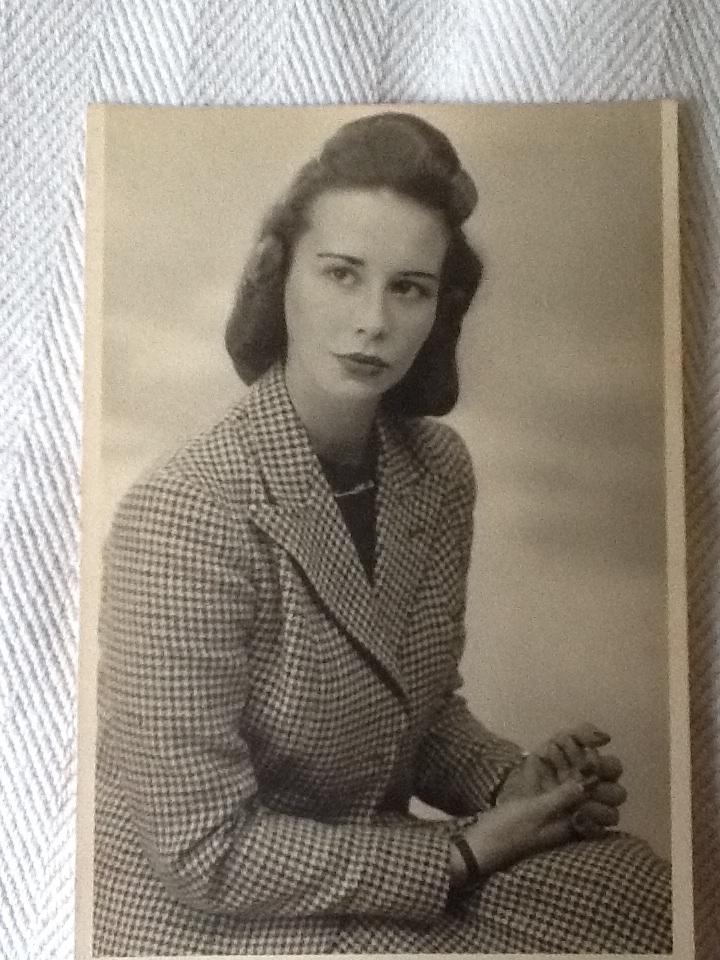
My mother, Peggy Slaughter, in 1941.

My mother, Peggy Slaughter, in 1941.

At the group meeting in April we discussed re-assessing our writing projects – what we’ve achieved so far, and how we think we might progress towards a conclusion.It is three years since we did the Faber course and I think we have done well to keep the core of the group together, supporting each other and work-shopping extracts at regular meetings, as well as keeping the blog going and maintaining a Facebook page. However, like others in the group, my main project has stalled. Writing about my mother’s life was meant to have been completed in time for her 91st birthday, and she has just turned 94! Instead of agonising over the ‘chronicles of wasted time’ it would be more useful to decide how to use what I’ve written so far, find the gaps and fill them in , and produce that rotten first draft and submit it to the scrutiny of an editor – in other words, face the music. Sometimes one is so involved in the research and writing you forget that the main purpose is for it to be read by other people.

I have come to some conclusions about my project.
a] to concentrate on my mother’s early life [ 1920 – 1950] – not to try to write about it all.
b] produce it privately, for family and friends
c] to use as many photos as possible, as this brings it alive for younger members of the family.
d] to make realistic goals for achieving the various stages on the way to publication e.g.prepare the first draft for an editor
f] stop being afraid. I think the fear is holding me back. I need to recognise this , and “Feel the fear and do it anyway’, as Susan Jeffers wrote.
g] to remember the original idea and enthusiasm that started me off on the project – and remember writing can be fun too.

Meanwhile we are in the process of moving house, downsizing and throwing out the clutter after 37 years. There are plenty of diversions and distractions, as well as the emotional upheaval .The boxes of notes and photos will have to be stored away until I have a new study to work in. So I must use my time wisely and try to keep the end in sight. Maybe I shall be able to give a first draft to my mother for Christmas, or at least in time for her next birthday!

Categories: How we write | 2 Comments

Bath – the headquarters of Satan?

While I have been enjoying the current vogue for the Georgians, it does seem to be very gentry and metropolitan focussed.  Far from everyone at this time experienced either grinding poverty or, if wealthy, had a pragmatic secular outlook and engaged in frivolous pastimes like dancing, card games and music.  The trading and nascent industrial wealth of the country was largely the work of a different class – merchants, bankers and manufacturers in the Midlands and the North of England – often, though not exclusively, Protestant non-conformists.  They practised an austere lifestyle in the manner of their Puritan forebears and were devoutly religious, hard working, honest, philanthropic and plain of speech and manner.  Their work left little time for recreation of any sort and the Sabbath was spent attending religious services or in private devotion.  My Burnley ancestors in Yorkshire were among them.

John Wesley, founder of Methodism

John Wesley, founder of Methodism

That other famous Georgian, John Wesley led a huge religious revival in the mid-18th century, and there were many evangelical Anglicans who shared his mission.  While their primary concern was salvation in the next life, they also preached the values of thrift, sobriety and hard work in this one.  Evangelical Anglicans eschewed music, cards, ostentatious dress, gambling and certain blood sports like cock fighting – the latter lost them support among the lower classes.  Wesley himself thundered against the mostly innocent amusements of a spa town like Bath, calling it ‘the headquarters of Satan’.  Card games, though perhaps innocuous in themselves, he considered ‘murderers of time‘.  We might smile today at such extreme views but they proved not only enduring, but very influential in the following century and helped fuel all manner of political campaigns, for example the temperance and anti-slavery movements.

It would be a grave mistake to imagine there was only ‘one’ Georgian society, or that its behaviours and values were universal.

Margaret

Categories: Men of God, and of Commerce | Tags: , | 1 Comment

Great- Grandpa writes from St Petersbourg 1912


The last letter I have that my great-grandfather, Alfred John Liversedge (AJL), wrote to his children is from 1912.   He is writing to my great aunt, his elder daughter Ethel, by now she is 24 and a young woman.  He is with two companions in St Petersbourg in April 1912.  This is the time in his life when he seems to have been working more as an independent consultant.  The letter is written on headed notepaper from the Grand Hotel d’Europe where they have taken a room so they could have a wash after their all night journey, from where he doesn’t say..  They have been sightseeing “three churches – simply gorgeous, all images and ikons – pictures of the Virgin Mary and of Jesus, worked with gold and set with jewels – extraordinary.”

Nevsky Prospeck 1912

Nevsky Prospeck 1912

They have come into the hotel for tea, two glasses and one cake “delicious”.  He is very impressed with the city and in particular the Nevsky Prospect, “we have no street in London or elsewhere to compare with the Nevski Prospect here; and when one sees such a magnificent thoroughfare and magnificent buildings one wonders why all the world flocks to London”.

In the hotel they are reading Tuesday’s newspapers which are carrying the first accounts of the Titanic loss. 

He signs of by sending her “…ever so much LOVE and so many KISSES and so I remain your loving Dad”.

I am always surprised when I see “Dad” used as far back as this, somehow, in my head, “Dad” is a modern term, far more familiar than I would have expected of this Edwardian gentlemen.  My mother always referred to her father as “Daddy” but that may have been because he died when she was still a child.  Anyway it seems “Dad” first appears in the 1500s although the Oxford English Dictionary states that they have no evidence of its actual origin which maybe much earlier.

Barbara


Categories: Journeys | Tags: , , , | 1 Comment