
I have collected over 50 Wills in the course of my family history research, ranging in date from 1802 to 1975. One of the reasons I focussed my efforts on particular branches of the family was the likelihood of their leaving Wills, as well as being of sufficient local importance to feature in various archives. I was otherwise almost bereft of material, until the 20th century. I now know a fair amount about their wealth and lifestyles even if their Wills contain mostly standard provisions. So what novelties have they revealed?
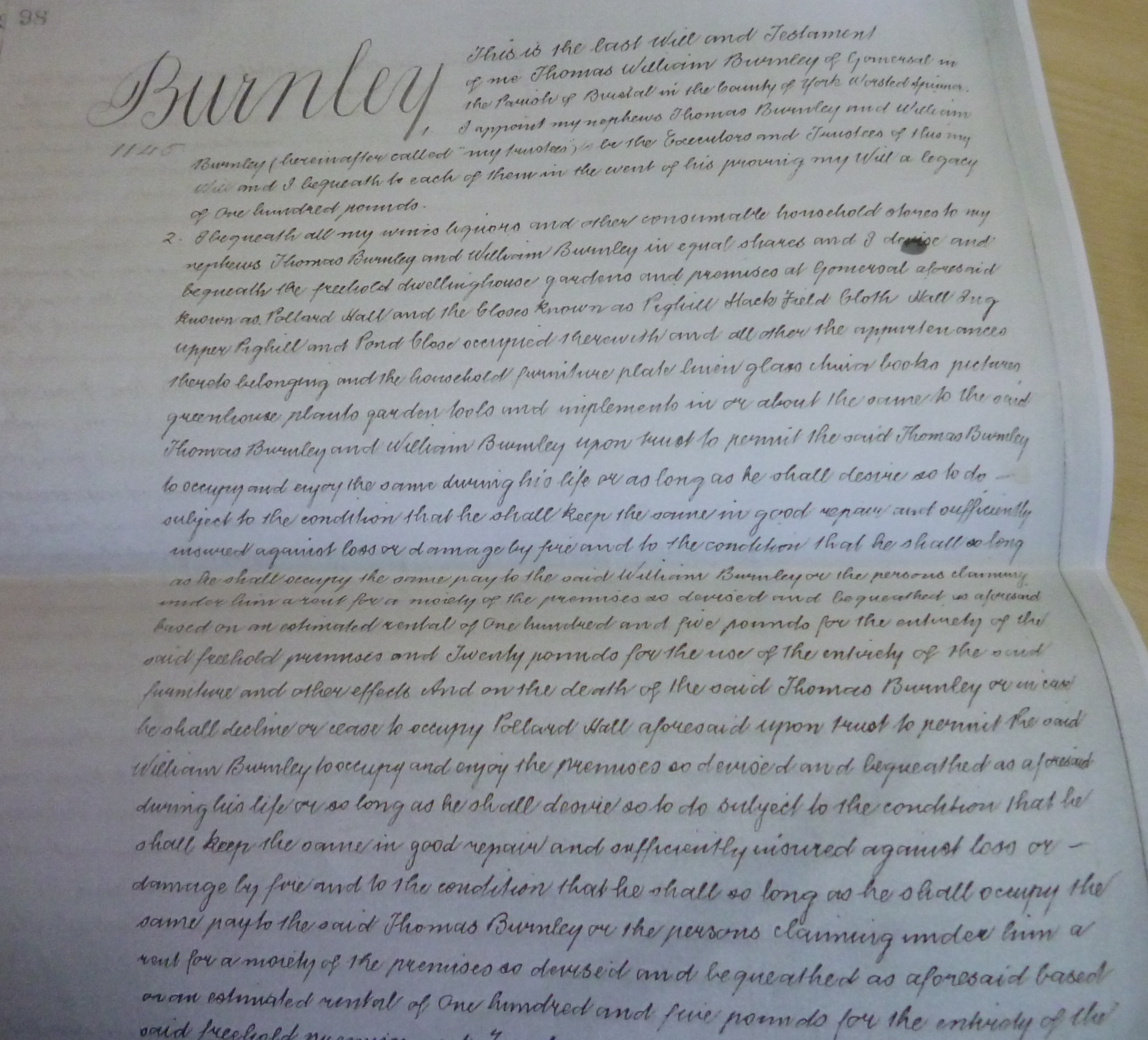
Thomas-William’s Will 1906
Thomas Rhodes (died 1804) could not write – he left only a mark, as well as a sum in trust for his grandchildren by his deceased daughter Jane, whose husband James Burnley (died 1833) identified a vital business connection in his choice of executors. Thomas Burnley (died 1863) alerted me to a niece, Annie Farnell, born posthumously in 1832 after his brother William’s sudden death in 1831. Also that he had that fashionable item, a greenhouse full of plants – they became very popular after the Great Exhibition of 1851. James (died 1867) truly was a business partner with his brother Thomas-William. Elizabeth Thyer Milner (died 1886) was aggrieved about an outstanding debt owed by her niece’s husband, James Studley Nokes. Frank (died 1889) had scribbled a single page from his deathbed on which he showed more concern about the fate of his precious shorthorn cattle – hobby farming – than the rest of his worldly goods. Mary Susannah’s (died 1902) confirmed her brothers’ roles in her husband’s bankruptcy, as did Thomas’ (died 1926) in his brother James’. Although obviously drafted by legal advisers, I hear the clear, imperious voice of Elizabeth Milner Burnley (died 1950 age 88) making meticulous provision for everything, even the upkeep of her own grave. Elsie Burnley (nee Mann who died in 1954 after only eight years of a late marriage) wrote that her husband William had always said he didn’t want her money, so she hadn’t left him any – from an estate worth over £20,000.
Mere snippets among pages of formal, repetitive legal language – I have not bothered to record the cost of acquiring this lot. Invaluable, nevertheless, I maintain.
Margaret
2 Responses to The value of Wills