
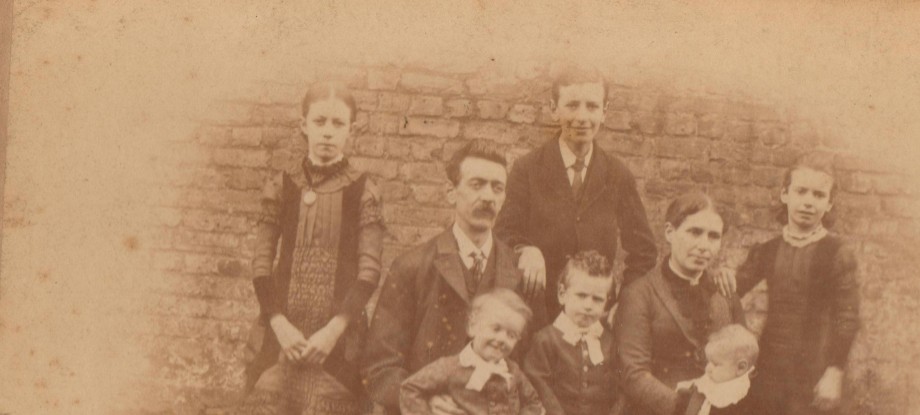
Early in 1915 my grandfather, Frank Oswald Burnley, was commissioned as a 2nd Lieutenant into the 16th (Service Battalion) of West Yorkshire Regiment, after some three months in the Territorials (the Reserve Army Service Corps). This was a Bradford brigade. The following year, paid for privately I suspect, he gained his Aviator’s Certificate on a Maurice Farman Biplane at Military School, Shoreham and joined the Royal Flying Corps. He saw active service as an Observer, not a pilot, which entailed gathering the information to direct artillery and general reconnaissance.
The Royal Flying Corps had a glamorous reputation – it attracted adventurous spirits and risk-takers. They were well paid and lived extravagantly but it was dangerous work. Pilot training was often cursory, especially in the early days of the war. Many recruits had only two or three hours of flying instruction before being expected to fly solo. Men were often sent to France having logged only 15 hours in the air.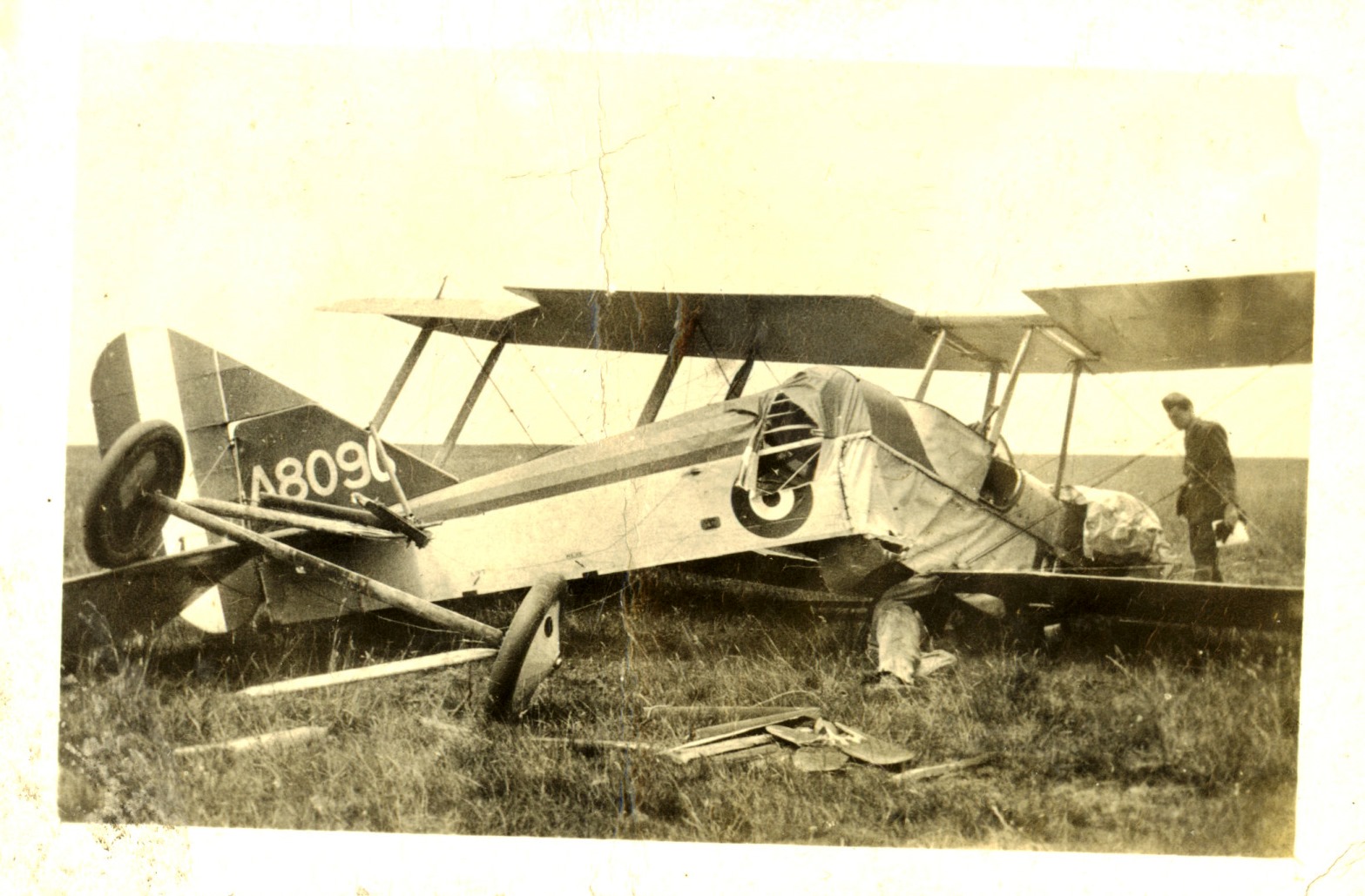
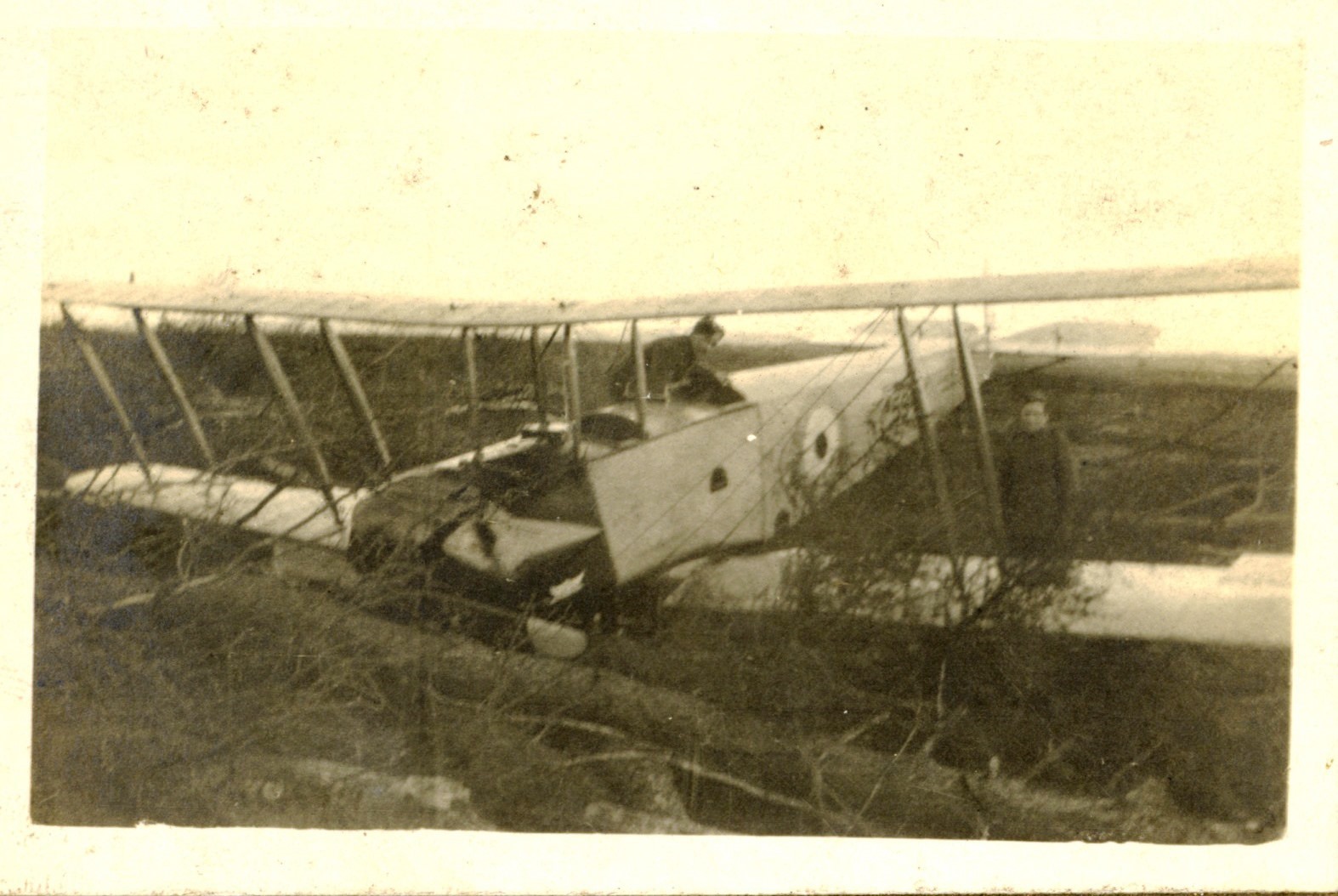
WW1 air accident
Some 8000 young men died in Britain during flight training, which means that more died from accidents and mechanical failures than from enemy action. During 1917 steps were taken to address this carnage but ambulances continued to be on standby at training airfields. The pictures shown come from an album of original photographs collected by Frank and, where dated, his captions are from 1917.
In the early years pilots lasted an average of three weeks once they arrived at the Western Front. Those who were not killed, wounded, or taken prisoner might be posted out because of ‘nerves’. Flying was extremely stressful and dangerous. Frank, like the rest, smoked heavily to calm himself. I wish I knew how much actual flying he did. I do know he was very sound technically and may have been involved in ground maintenance. In 1918 he was granted a temporary commission in the newly formed Royal Air Force, created by a merger with the Army Flying Corps and the Naval Air Service.
Margaret