
When did our habit of taking summer holidays by the sea begin? In the 18th century it seems. Doctors began to recommend the ocean for its therapeutic properties and at first people went to cure their ailments. By 1780 Brighton had been transformed into a prosperous seaside resort, attracting many famous people. It was already fashionable when George, Prince of Wales, made his first visit in 1783. He began to build his magnificent pleasure palace, the Royal Pavilion, from 1787.
Biarritz, on the Bay of Biscay in France, was visited for health reasons in the 18th century, but it was Empress Eugenie’s palace in 1854 that made it renowned. Queen Victoria took regular vacations there, as did other European royalty. Their example was quickly followed by the wealthy but holidays for ordinary people had to await the coming of the railways to provide cheap mass transport. They began with day trips, then, decades later, could afford a whole week.
North Berwick, in East Lothian on the south shore of the Firth of Forth, became a popular resort in late Victorian times. It had a sunny and relatively dry summer climate, two sweeping sandy beaches
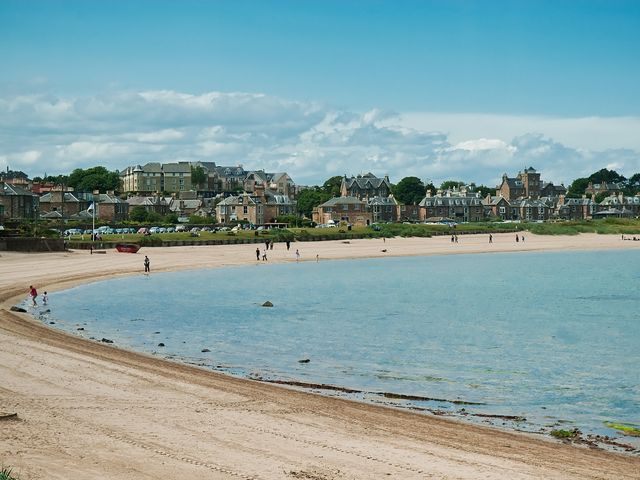
East beach, North Berwick
and a harbour. Its first golf course was founded in 1832 by gentry and nobility from the surrounding area. From 1849, challenge or brag matches between the best golf professionals of the day attracted large crowds. In 1850 the railway arrived. The slogan ‘Biarritz of the North’, coined in 1889, was later part of an advertising campaign to attract visitors and promoted by the North Eastern Railway Company to increase its passenger numbers. Notable Scottish families already spent the months of August and September in the town, bringing with them their entourage of housekeepers, butlers, footmen and nannies to manage the household – local merchants and shopkeepers would supply all their sundries. Summer day trippers could also take a paddle steamer. On Easter Monday 1895, regular and special excursion trains brought in 1500 people. When added to those already in the Burgh for the weekend, this amounted to over three thousand visitors.
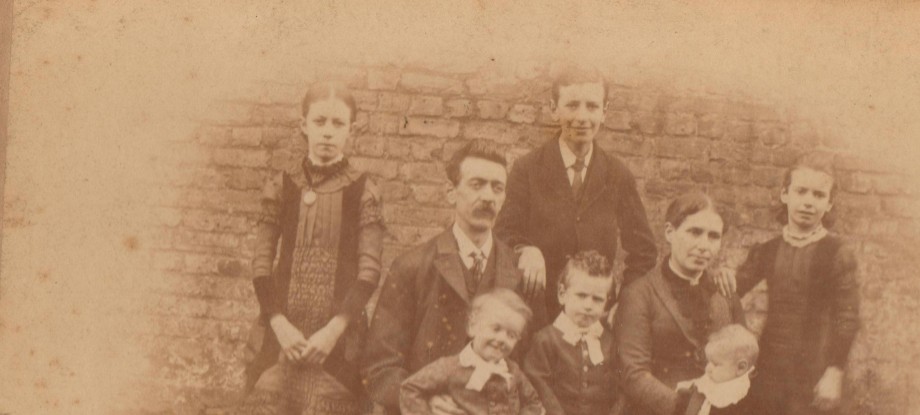
Soon the middle-classes chose to retire to such destinations. My ancestors were part of this notion of leaving one’s birthplace and lifelong abode – lured by the prospect of health, recreation and restorative Nature. Thomas Burnley left the wool mill and soot encrusted Yorkshire village of four generations of his family to retire to North Berwick in 1920. So modern, so normal, but really quite a strange thing to do?
Margaret