
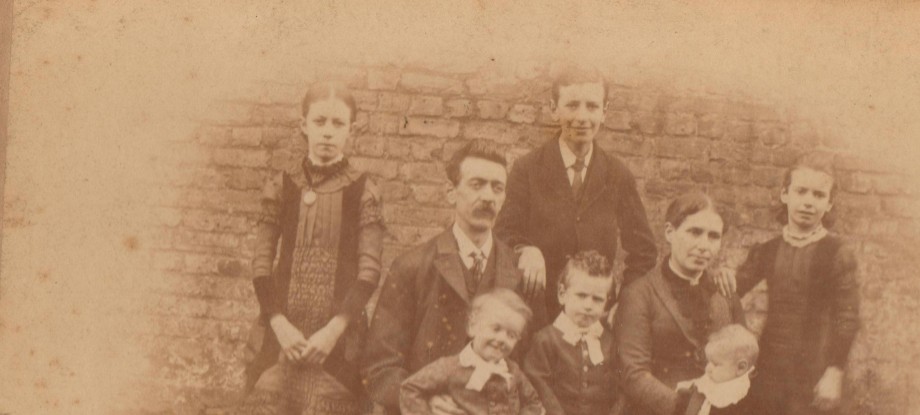
There was a major reorganisation of local government in 1888 of which one outcome was the setting up of the County Council of the West Riding, which chose to meet in Wakefield. My ancestor Frank Burnley (1837-1889) was elected the first councillor for Birstall district – a feat achieved amidst some controversy. Local newspapers of this period are a fantastic resource for family history if one’s ancestors played any role in public life and I have a full account of his election campaign. He had chaired the Local Board in Gomersal for the previous 14 years and, being a major local employer, was considered the leading spokesman for the area. However he had no strong allegiance to any political party, nor was he a Justice of the Peace (JP). As many Justice responsibilities at the Quarter Sessions were now being transferred to the new county councils, they were the natural candidates for the new body. But Frank and his supporters were not so deferential as to allow this to happen unchallenged.
In January 1889 Frank was reluctantly persuaded to stand as a candidate. His preferred candidate, William Carr JP, would not challenge the Liberal Party nominee, Thomas Taylor JP of Oakwell Hall, whom Frank claimed had not proper experience of public affairs in the district, saying enigmatically at one meeting that ‘there were justices and justices’. His audience understood what he meant. Frank was nominated at a cordial meeting at the Gomersal Mechanics Institute in January 1889 when the Chair opened with a statement that party politics had no place on the County Council. Frank’s platform was efficient administration for the ratepayer and he joked that even a friend of 20 years standing could not say what his political beliefs were. He promised not to campaign on personal issues, despite the animosity he attracted. He stood as an Independent, rebutting accusations that this meant he was a Tory!
He ran a short but vigorous campaign, facing down hecklers at rowdy public meetings. A man of principle, he would not be bound by the ‘temperance lobby’ to end Sunday pub opening without
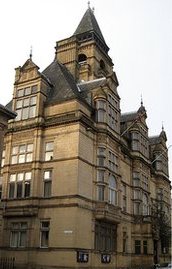
Wakefield Town Hall where the new County Council met
compensation to landlords, nor restrict licensing hours on other days, although he deplored the vice of drunkenness as much as anybody. He did commit to viewing any scheme to reduce this evil with an open mind. His views on public health issues, vaccination, drainage and other utilities were well known. His opponent accepted the temperance movement’s demands and was thereby promised blocks of votes, up to 300 at one meeting in Birstall. This did not swing the result and Taylor lost by 159 votes, the Conservative candidate having tactically withdrawn. Frank won 1,120 votes and was duly elected on 29 January 1889. He took his place, alongside 68 other representatives, at the meetings at Wakefield. They were held at the Town Hall until 1898 when a new County Hall was opened. Frank perhaps felt quite at home there. His brother-in-law, William Hartley Lee, had already served several terms as mayor.
Frank was to enjoy this role a mere nine months. A chest infection claimed his life on 28 December 1889, age 54. At least he merited a brief obituary in the Leeds Mercury and, to my great joy, a far longer one in the Cleckheaton and Spenborough Guardian. His less distinguished brother, George Herbert, was my great, great grandfather.
Margaret
2 Responses to Frank Burnley’s political career