

In 1884 my great grandfather, Alfred John Liversedge, left Victor Coates and Co in Belfast and moved to Messrs Watson, Laidlow and Co in Glasgow who made centrifugal drying and separating machinery. Whilst working for them he visited London in 1885 as their representative at The International Inventions Exhibition. In August I wrote a piece about the exhibition and his shared patent for a machine for drying paints and slurry. In his application for membership of the Institution of Civil Engineers AJL mentions that he experimented with this machine for Sir Joseph Bazalgette, then Chief Engineer at the Metropolitan Board of Works, at Crossness Pumping Station.
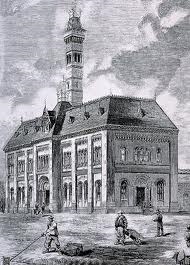
Crossness Pumping Station
The Crossness itself is located on the Erith Marches at the eastern end of the Southern Outfall Sewer in the London Borough of Bexley. Constructed between 1859 and 1865, as part of Bazalgette’s redevelopment of the London sewerage system, it features spectacular ornamental cast ironwork, that Nikolaus Pevsner described as “a masterpiece of engineering – a Victorian cathedral of ironwork”. The pumping station was part of a number of measures taken in response to The Great Stink of 1858 when the combination of an unusually warm summer and a heavily polluted Thames led to sacking soaked in deodorising chemicals being hung over the windows of the Houses of Parliament.
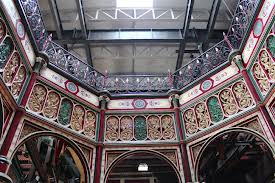
The Octagon – Crossness Pumping Station
Crossness was indeed one of the engineering marvels of the Victorian age, Dickens gives advice for visitors to it in his 1881 Dictionary of the Thames, remarking on the need to change trains at Woolwich Arsenal. At the time of his writing Dickens records that there were four centrifugal pumps in place “worked by two superannuated locomotives from the Great Western broad-gauge stock”. In its early days the sewage was simply disposed of into the Thames to be taken to the sea but in 1882, a Royal Commission recommended that the solid matter in the sewage should be separated out, and that only the liquid portion remaining should be allowed, as a temporary measure, to pass into the river. In 1891, sedimentation tanks were added to the works, and the sludge was carried by steam boats and dumped further out into the estuary, at sea.
The pumping station itself was decommissioned in the 1950s when it was not considered economic to dismantle the engines as the cost of doing so far exceeded any scrap value. The engines have been restored and can be seen working on open days so after all these years after Dickens Crossness is still drawing visitors.
As to my own engineering experience, at one time I was interested in working in public health engineering, what we politely called sewage disposal, and as part of my degree I specialised in fluid mechanics. One summer when working as a student for Hasting Urban District Council I was taken on a tour of the long sea outfall sewage system by the engineer who designed it. There was no safety gear in my size so I wore a plastic mac and wellies and was given the leaflet on Weil’s Disease after the tour. In Hastings the disposal system similarly to Crossness relied on the proximity of the sea and via a dramatic series of venturi flumes the neat sewerage was discharged. It was one the most fascinating places I have ever been although visions of the final scenes in the Third Man probably coloured my view.
Barbara
2 Responses to Great grandpa and The Great Stink